
Blog
The Impact of Messaging Apps on APAC Travel
By Zoe Qian
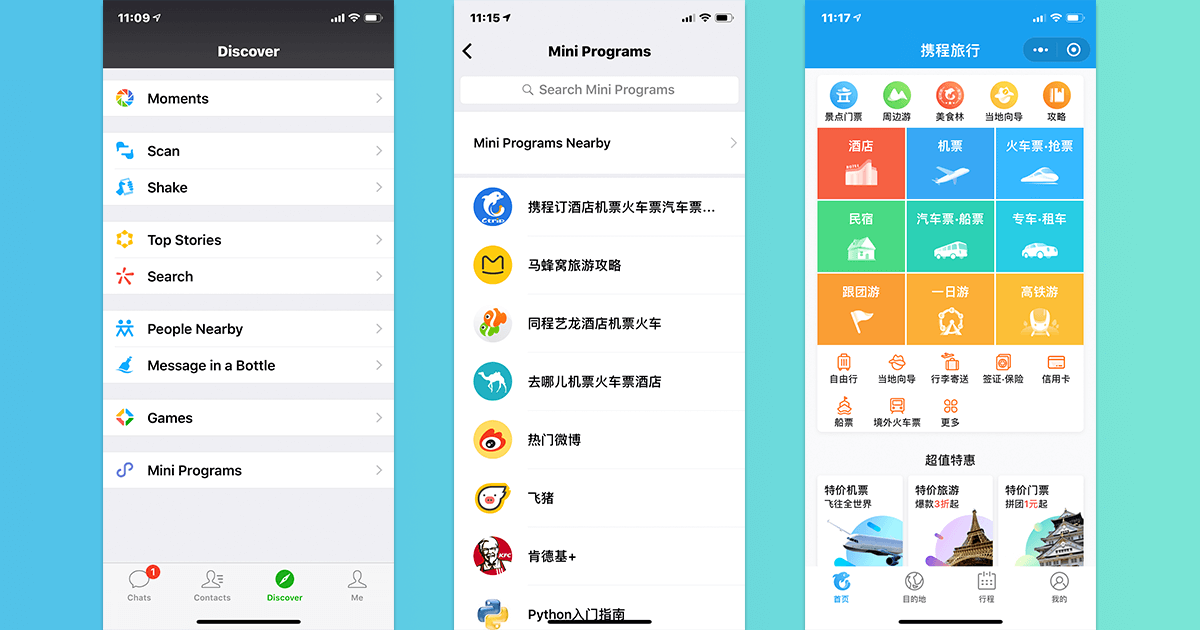
The mobile-only world is fast approaching in the travel industry. In terms of mobile booking rates for hotels, Asia is far ahead of the rest of the world, and China is leading the pack with 60% of its online bookings made on a smartphone. North America and Europe stand at just 28% and 33%, respectively. One of the reasons for such disparity is due to the surging popularity of messaging apps in Asia. These platforms, originally designed for messaging services, have transformed to encompass other services including shopping, banking, news sharing, and travel activities as well. With a seamless user experience and quality travel-related content, these messaging apps play a pivotal role in shaping consumers’ travel planning journey from the moment of inspiration to making a booking decision.
As a part of the powerful Tencent ecosystem, WeChat has now reached an 86.7% domestic industry market share since its launch in 2011. As of March 2018, WeChat global active users amounted to over 1 billion, making it one of the most significant messaging apps in the world. This momentum in market share granted WeChat a perfect pilot to develop its hotel booking platform. On “Mini Programs” (a form of sub-applications within the WeChat app) major OTAs in APAC such as Ctrip, Qunar, Fliggy, and Yilong, have successfully diverted their website and app users to generate more direct bookings. Mini Programs are easy to use and accessible for all WeChat users. And since users have already set customized parameters when they search a certain type of Mini Program, these OTAs can better tailor their products to increase their conversion rates. For example, Ctrip’s landing page UI within the WeChat Mini Program features abundant content to provide a one-stop shop for a complete trip, similar to its user experience on Ctrip.com and its native mobile app. Furthermore, WeChat’s granularity in audience information (such as demographic distribution, location, mobile device, annual income, and marital status) allows advertisers to deliver customized feeds and content to reach specific audiences and meet their marketing objectives. With such valuable accessibility to users, many international hospitality brands have landed on WeChat and made great progress here. Airbnb advertised its vacation rentals in Bangkok, Seoul, Okinawa, and Taipei by inserting a link-attached Ad Card in WeChat’s news feed and playing introduction videos at the bottom of recently released articles in Airbnb’s own public account. The campaign reached more than 10 million users and the ad click rate ranked as #1 in the industry. Marriott benefited from this effect of extended reach, too. Targeting users with three generations in their family (a common living style among Asian families,) the brand boosted 1000+ daily subscriptions on its public account by advertising hotels that are perfect for families in Moments (WeChat’s news feed,) with an impressive interactive ad click rate of 13.5%. 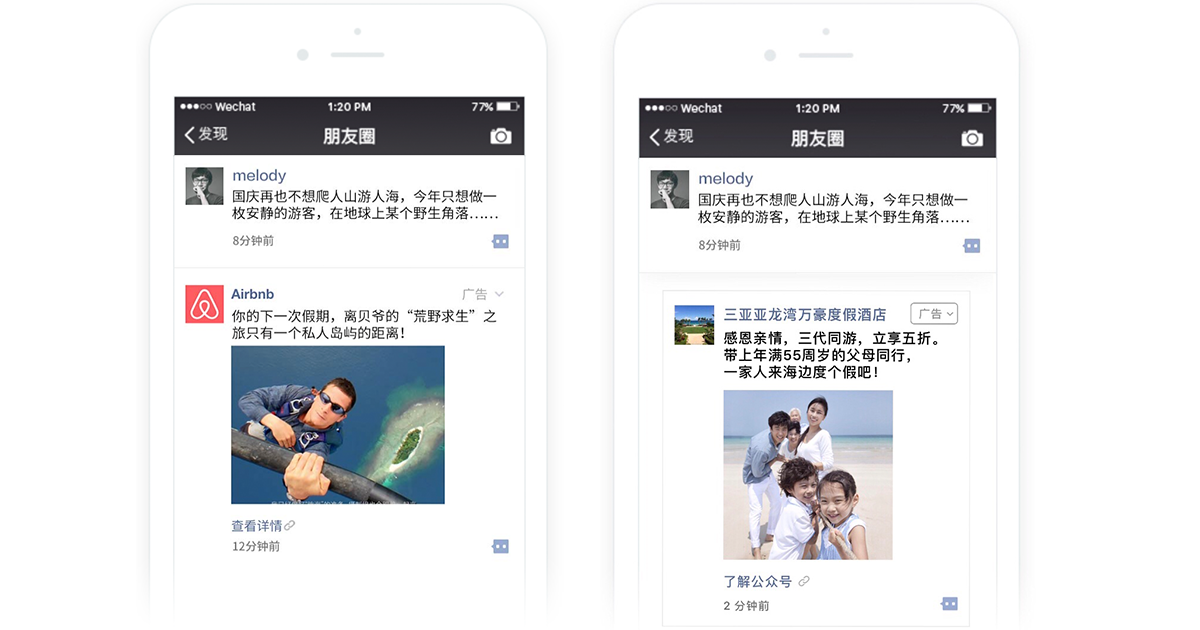
Kakao Talk
In South Korea, KakaoTalk continues to dominate the local market where 99.2% of total messaging app users use KakaoTalk. Currently, KakaoTalk boasts 49 million users, with more than 41 million of those based in Korea, accounting for 94.4% of the total time spent on mobile messengers in the country. The popularity of this messaging service lies in its all-in-one app ecosystem. In addition to its user-friendly design and appealing emojis that adhere to Koreans’ taste, users can view others’ stories, shop, make payments, and even request a taxi all from a single app. As a result, Koreans spend almost 850 minutes in KakaoTalk in an average month, compared to 28 minutes spent on Facebook Messenger. 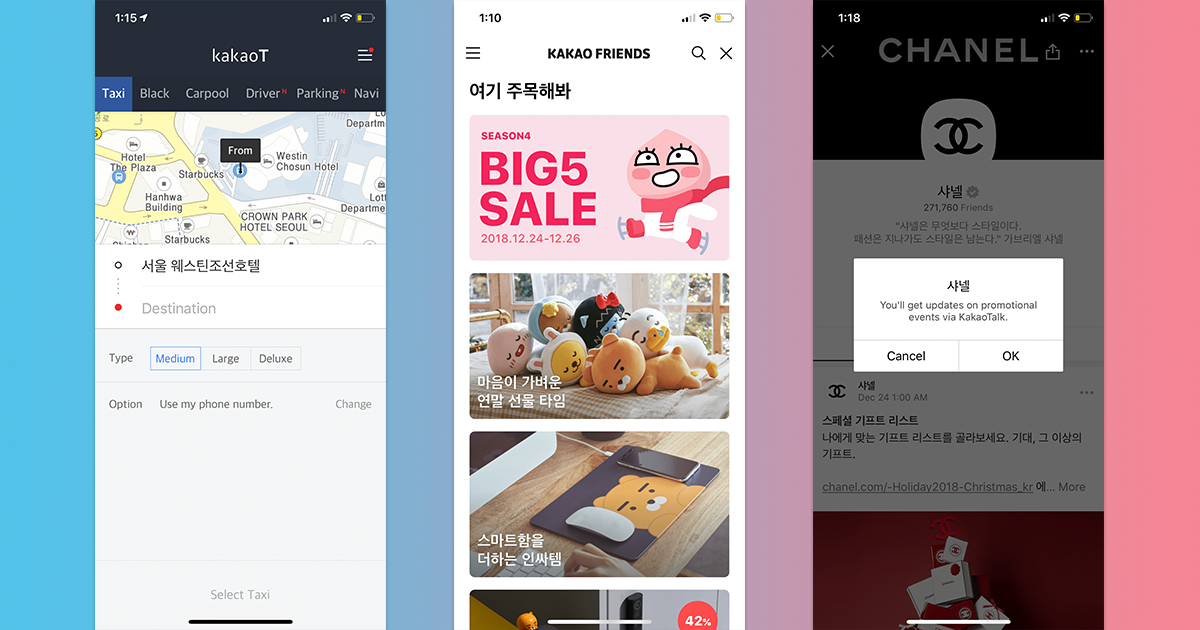 With such high activity among users, it is common for Korean businesses to have an active presence on KakaoTalk. The app has a feature called Plus Friend in which brands can set up a dedicated page on KakaoTalk to chat with consumers and communicate updates and deals. Once a user adds a business as a “friend”, they can start chatting, make restaurant reservations, order delivery, and book hotels. The fast reply time by businesses only adds more convenience to this seamless communication method that users enjoy on a daily basis. Rather than a one-way bombardment of ads, KakaoTalk offers a friendly conversational approach, creating an efficient ecosystem between users and businesses. As one of the companies that benefited from KakaoTalk marketing, Tourism Australia saw a 12.4% increase in Korean tourists to Australia by setting up a KakaoTalk web page in Korean and releasing content through private messaging. Once tourists arrive in Australia, they can access location-based deals among local restaurants and activities through KakaoTalk.
Line
Another messaging app is LINE with nearly 200 million active users per month across Japan, Taiwan, and Thailand. It is the most popular messaging platform in these areas, and it is also growing its influence in Hong Kong, Singapore, Spain, and Argentina. While LINE remains devoted to its core service of messaging, it has also expanded its services to shopping, food delivery, payment, news sharing, and job searching. With such a variety of offerings, LINE taps into the everyday lives of consumers. Travel services are no exception as the app launched LINE Travel in July 2018, making it the largest price comparison platform for travel in Japan. It allows users to research, compare prices, and book hotels and airfare at the best deals from over 250 companies including JTB, the largest travel agency in Japan. Because the service is directly accessible within the app, it encourages users to be more spontaneous when the urge to travel strikes as they can look up accommodations right away while chatting with friends. 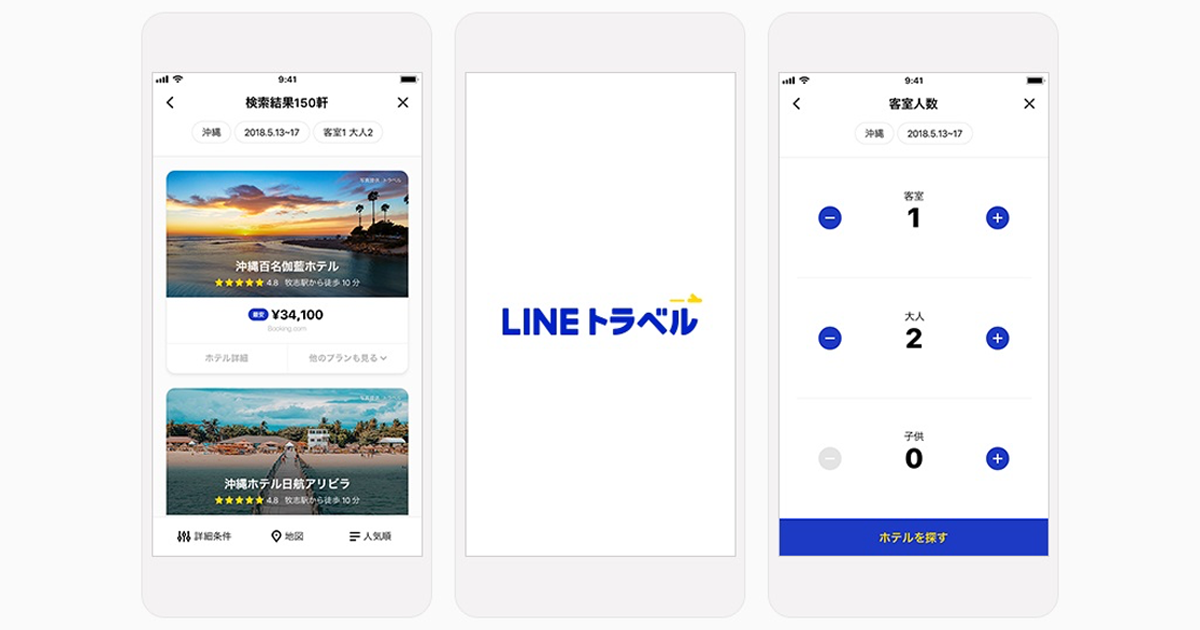 The service also heavily focuses on the upper funnel of users by sending them trending travel articles, and trip recommendations via messaging. As people who travel together tend to have their own group chat rooms on LINE, they can receive relevant content articles powered by an AI chatbot which assists in booking hotels and reserving activities and restaurants. With metasearch and content features, LINE Travel minimizes the various touch points an average user has to go through such as browsing through different websites for research and purchasing. As the app retains users in one setting throughout their travel planning journey, it certainly is a desirable marketing space for businesses to be in to reach out to potential consumers. One common theme across all three of these messaging apps is the versatility they offer across different services. This ability to do everything in one app aligns with the changing user behavior of particularly millennials who demand instant information and efficiency. As consumers are spending more time on messaging apps and on their phone in general, it will be interesting to see how these travel trends develop and evolve.
You may be interested in
GET IN TOUCH
Ready to get started?
Don’t let your brand get lost in the noise. Partner with Koddi to unlock the power of commerce media and transform the way you engage with your customers. Our team of experts is here to help you navigate complexities and develop a strategy that drives results — no matter what industry – in as little as 45 days.