
Blog
Google Maps upgrades position 1 Metasearch: What it means for hotel marketers
By Luke Mullin

Google is experimenting with a new hotel metasearch layout across Google Maps for Desktop, Android, and iOS.
If you win position 1 in the metasearch auction, your listing automatically upgrades into a premier hero placement anchored near the top of the property card, positioned directly beneath the hotel name and well above the standard price comparison feed. While currently appearing in select user tests, we expect Google to expand this layout across more live traffic, giving position 1 advertisers an extra visual impression and prime real estate on the card.
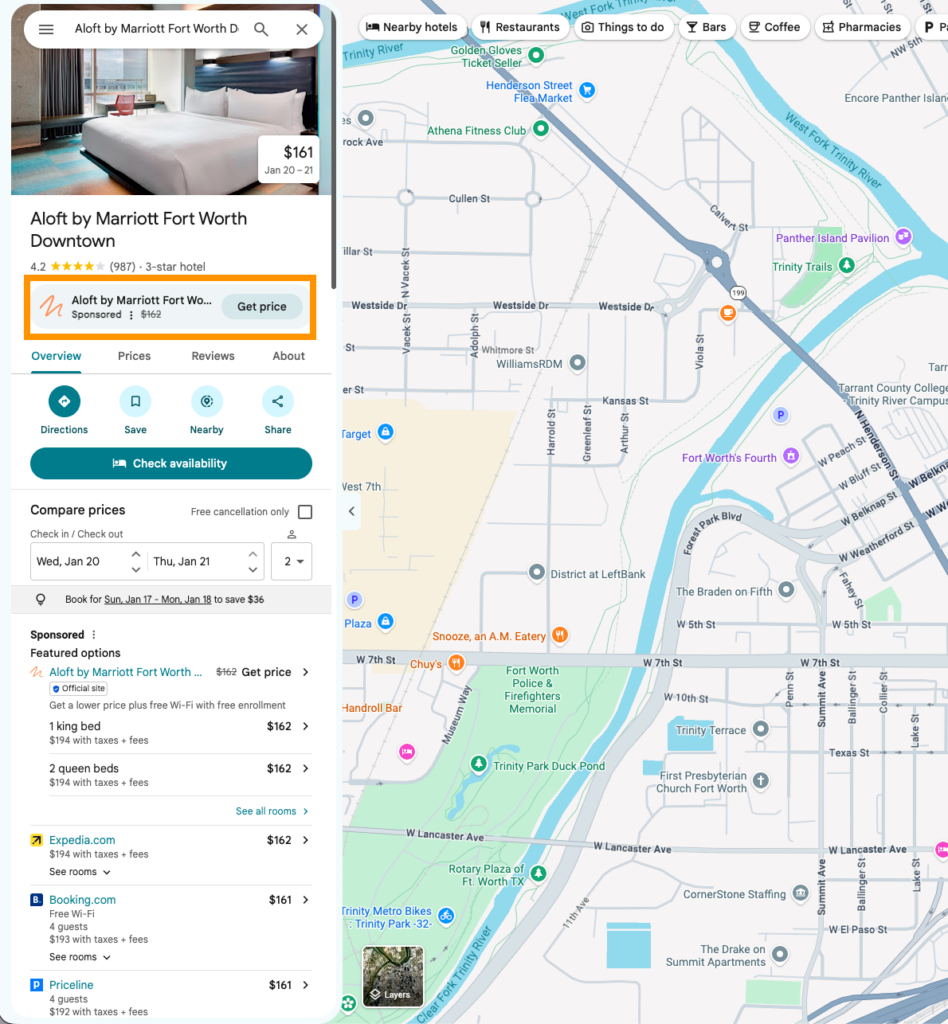
The new position 1 hero placement highlighted at the top of the Google Maps property card.
The auction mechanics: Does this cost extra?
Short answer: No.
Whenever Google shifts its UI, the immediate concern for advertisers is auction inflation. But this is not a separate ad unit with an incremental bid or higher fee.
This hero unit is awarded automatically to whichever advertiser wins position 1 in the standard Google Hotel Ads auction. Clicks on the hero banner share the exact same CPC, impression, and click accounting as your standard position 1 listing below. In short: winning the top slot now gives you double the visual surface area on Google Maps for the exact same cost.
Why Google Maps real estate drives heavyweight impact
Because Google Ads aggregates metasearch reporting under a unified search umbrella, it’s easy for marketers to underestimate how much volume originates specifically on Maps. However, post-click attribution benchmarks across hotel portfolios show just how significant this surface is:
- Strong Maps contribution: Across hotel brands, Koddi generally sees Google Maps drive a meaningful share of paid metasearch revenue, often in the 40%–50%+ range.
- High-intent bookers: Guests browsing on Google Maps exhibit strong booking intent, making Maps traffic a strong driver of total booking value.
- Desktop-led Maps revenue: We generally see 80%+ of paid Maps revenue coming from desktop, making the new desktop layout particularly relevant.
Because the hero placement now occupies valuable vertical real estate above the navigation tabs, position 1 and lower listings are pushed further down the card. While lower ranks may still be visible, the hero placement now commands the overwhelming share of initial visual attention.
What hotel advertisers should do next
- Evaluate position 1 share on key properties: Review top-position impression share across your portfolio to identify which hotels are already winning position 1, and pinpoint where bid adjustments could push flagship properties into top slot hero territory.
- Test strategic bidding for top slots: Run targeted tests in key areas to understand whether increasing position one share drives incremental traffic and booking volume, and at what cost.
- Refine bidding strategy as performance develops: We’ll use the test results to determine where the added value of position 1 supports more aggressive exposure and adjust strategies accordingly as the placement scales.
Have questions about how Google’s layout updates impact your campaign strategy? Reach out to the Koddi team to discuss optimization options for your portfolio.
GET IN TOUCH
Ready to get started?
Don’t let your brand get lost in the noise. Partner with Koddi to unlock the power of commerce media and transform the way you engage with your customers. Our team of experts is here to help you navigate complexities and develop a strategy that drives results — no matter what industry – in as little as 45 days.